Chiropractic Care for Dogs & Cats in the Rochester, NY area

Dr. JESSI TURNER, CVMMP (PENDING)

Certified Veterinary Medical Manipulation Practitioner

If you're noticing your dog is reluctant to go up the stairs, your cat has stopped grooming their back, or your otherwise healthy dog seems "off", Veterinary Medical Manipulation (often referred to by pet parents as animal chiropractic care) can ease pain, help flexibility, and reduce muscle tension to bring back a better quality of life for your furry friend.

LEARN MORE

Restore your pet's mobility with in-home veterinary manipulation therapy.

If your looking for a 'dog chiropractor' or 'cat chiropractor,' you've found the right place. The proper term in veterinary medicine is medical manipulation. Veterinary medical manipulation is a specialty in veterinary medicine that involves precise, hand-on assessment and treatment of restricted joints.

What does veterinary medical manipulation treat?

Back & neck pain or stiffness  |  Intervertebral disc disease (IVDD)  |  Hip and elbow dysplasia  |  Limping or gait abnormalities  |  Post-surgical recovery | Neurological conditions   |  Muscle tension  |  Chronic compensation  |  Athletic conditioning  |  Age-related mobility CHANGES

a dog and a cat are standing next to each other in a heart .

Benefits of VETERINARY MEDICAL MANIPULATION

Restored Mobility & Flexibility


Restricted joints can change the way your pet moves and goes about their day-to-day life. Veterinary Medical Manipulation improves range of motion so your pet can move the way they were meant to.

Drug-Free Pain Relief


For pets managing chronic pain, or those whose owners want to minimize long-term medication use, veterinary medical manipulation offers a non-pharmaceutical path to comfort.

Nervous System Support


The spinal cord is the root to nearly every nerve in the body. Restoring proper alignment, can bring back nerve communication to supports healthy neurologic function.

Faster Recovery from Injury or Surgery


Canine chiropractic care, or more accurately, veterinary manipulation, is a powerful complement to post-surgical rehab. It helps the musculoskeletal system heal evenly.

Performance & Conditioning


Athletic and working dogs especially benefit from regular manipulation to stay balanced and prevent overcompensation so they can perform their very best.

Support for Senior Pets


Aging changes joints, muscles, and the spine. Regular manipulation helps senior dogs and cats stay comfortable and maintain quality of life as their bodies change.

a drawing of a heart on a white background .
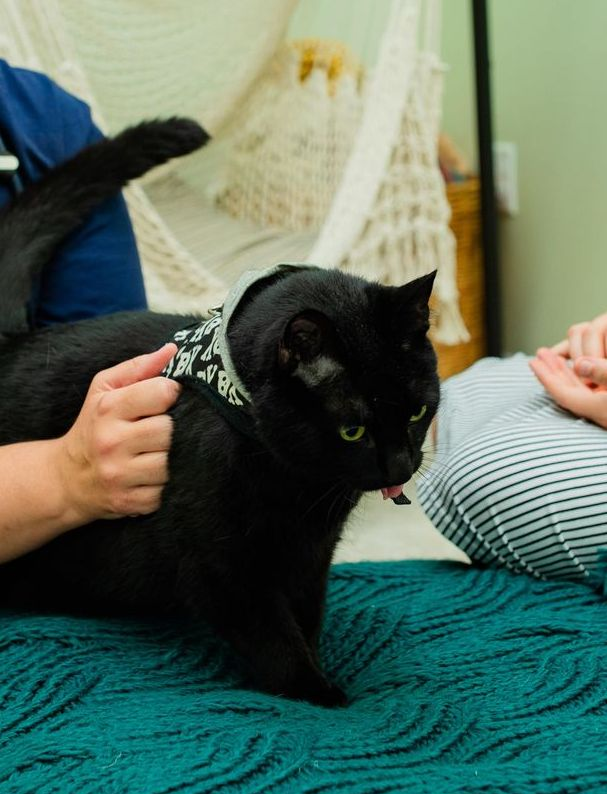
two women are sitting on a bed with a black cat .

Studies show chiropractic care is beneficial for pets.

Veterinary spinal manipulation is grounded in real science. The foundational research comes from decades of human chiropractic and osteopathic studies, and veterinary medicine has been building its own evidence base on top of that.


Studies have demonstrated measurable improvements in spinal mobility, reduced pain behaviors, and better function in dogs managing back pain and IVDD. Research has also shown that manipulation influences nerve conduction and muscle activation, a reminder that this treatment affects the nervous system as a whole, not just the joints being treated.

When to seek chiropractic care for your pet:

CANINE/DOG CHIROPRACTIC CARE

Dogs are expressive patients. They show you when something isn't right, even when they can't tell you where it hurts. Hesitating at the stairs, stiffness after resting, reluctance to jump, or just not moving the way they used to are all signals worth exploring.


Canine chiropractic care (Veterinary Medical Manipulation) is a good fit for dogs who are:


  • Recovering from surgery or an orthopedic injury
  • Managing chronic conditions like hip dysplasia, arthritis, or IVDD
  • Showing unexplained lameness or gait changes
  • Working or athletic dogs who need to stay balanced and performing well
  • Senior dogs whose mobility and comfort are declining with age
  • Seeking proactive care for keeping their active and aging furry friend moving well


FELINE/CAT CHIROPRACTIC CARE

Cats are the opposite of expressive. They hide discomfort instinctively, which means by the time something is obvious, it's often been going on for a while. The signs are subtle — grooming less of their back, hesitating before jumping onto furniture they used to leap onto effortlessly, or just seeming quieter than normal.


Feline chiropractic care (Veterinary Medical Manipulation) is worth considering if your cat is:


  • Managing arthritis or age-related stiffness
  • Recovering from an injury or procedure
  • Showing unexplained sensitivity when touched along their back or neck
  • A senior cat whose activity level or grooming habits have changed
  • Seeking proactive care for keeping their active and aging furry friend moving well


Frequently Asked Questions About Animal Chirpractic Care

  • What's the difference between a chiropractor for animals and a veterinary medical manipulation practitioner?

    Many pets are more comfortable in their own homes, especially seniors or those recovering from injury. Working with me at home also means the exercises directly translate to what you’ll be doing with your pet between visits, using familiar surroundings and everyday items instead of specialized clinic equipment. For pets that dislike car rides or have difficulty getting in and out of a vehicle, house call services can make rehab far less stressful.

  • Can veterinary medical manipulation be combined with acupuncture or rehab?

    Yes — and often the combination is more effective than either alone. Manipulation restores joint motion; acupuncture addresses pain and nervous system regulation; rehabilitation rebuilds strength and function.


    Dr. Jessi regularly combines modalities within a single visit when appropriate.


  • Do you offer chiropractic care for cats and dogs?

    Dog chiropractic care, or more precisely canine veterinary medical manipulation, is well established in integrative veterinary medicine and a natural fit for dogs of all ages and activity levels — from senior dogs managing arthritis to working dogs staying at peak performance.


    Cat chiropractic care is rarer, and honestly that's part of why it matters. Cats are subtle patients who hide discomfort well, and most veterinary manipulation practices don't prioritize them. Feline patients are fully welcome here, and in-home visits make the experience genuinely low-stress for even the most clinic-averse cat.


    If you're not sure whether your dog or cat is a good candidate, that's exactly what the initial consultation is for.

  • How is chiropractic for pets different from massage or rehabilitation?

    Massage and rehabilitation primarily address muscles, soft tissues, and functional movement. Veterinary medical manipulation works specifically on the joints of the spine and extremities, restoring mobility at the structural level. These approaches complement each other well, and Dr. Jessi often combines them as part of a complete treatment plan.

  • What is Veterinary Medical Manipulation (VMM)?

    Veterinary Medical Manipulation is a post-graduate certified specialty in veterinary medicine that involves the precise, hands-on assessment and treatment of restricted joints, primarily in the spine, but also in the limbs. Practitioners evaluate each joint for normal range of motion and apply controlled, low-force movements to restore mobility where it's been lost.


    It's distinct from human chiropractic in a few important ways:


    It's performed by a licensed veterinarian with specialized certification

    The technique accounts for the significant anatomical differences between species — a dog's spine is not a human spine

    The practitioner can also diagnose, order imaging, recognize contraindications, and integrate treatment with the animal's broader medical history


    The certifying body in the US is the American Veterinary Chiropractic Association (AVCA), and the credential Dr. Jessi holds — CVMMP — reflects completion of that post-graduate training and examination.


    The reason "chiropractor for animals" isn't technically accurate is that "chiropractor" is a legally protected title for licensed human healthcare providers. VMM is the veterinary equivalent — same therapeutic goal, built specifically for animal patients, held to veterinary medical standards.

  • What's the difference between an animal chiropractor and a veterinary medical manipulation practitioner?

    The term 'chiropractor' is legally reserved for licensed human healthcare providers. Some human chiropractors do work on animals, but without veterinary training they're operating outside their scope — unable to diagnose, order imaging, or recognize when manipulation isn't appropriate for your pet.


    A veterinary medical manipulation practitioner is a licensed veterinarian with specialized post-graduate certification in animal spinal and joint mechanics. Dr. Jessi Turner holds her CVMMP credential, which  means her training is specifically around animal anatomy, animal neurology, and the full context of your pet's health.


    So if you've been searching for an animal chiropractor,  you've found the right thing. You just now know the correct terminology.

  • How often does my dog need chiropractic care?

    It depends on why we're treating them. A dog recovering from surgery or managing an acute injury may benefit from more frequent visits early on, sometimes weekly, tapering as they improve. A senior dog with arthritis or chronic stiffness might do well with monthly maintenance visits. 


    An athletic or working dog may need seasonal check-ins to stay balanced and prevent compensation patterns from building up.


    After an initial consultation and assessment, I'll recommend a schedule that makes sense for your dog's specific condition, your goals, and your life. The aim is always to do what's genuinely useful, not more visits than your pet needs.

a dog and a cat are standing next to each other in a heart .

Benefits of In-HOME VETERINARY SERVICES

NO CLINIC ANXIETY


Pets remain in their familiar home setting, avoiding the stress and fear that can come with traveling to and waiting in a clinic.

Distraction-Free


Treatments take place in your pet’s own space, where they’re calm and focused without the disruptions of a busy clinic.

Familiar Home Environment


Being at home means exercises can use familiar features like stairs, furniture, or rugs, making them easier for you to repeat between visits.

Pet Owner Convenience


Mobile services save the time and effort it takes to transport your furry friend, especially elderly or injured ones.

More Accurate Assessment

Pet behavior can be skewed by stress and adrenaline in an in-clinic setting. Observing your pet at home allows me to realistically evaluate movement and behavior.

A teal lotus flower on a white background.

TAKE THE NEXT STEP:

Book your initial appointment

so we can discuss your pet’s specific needs.

INTAKE FORM